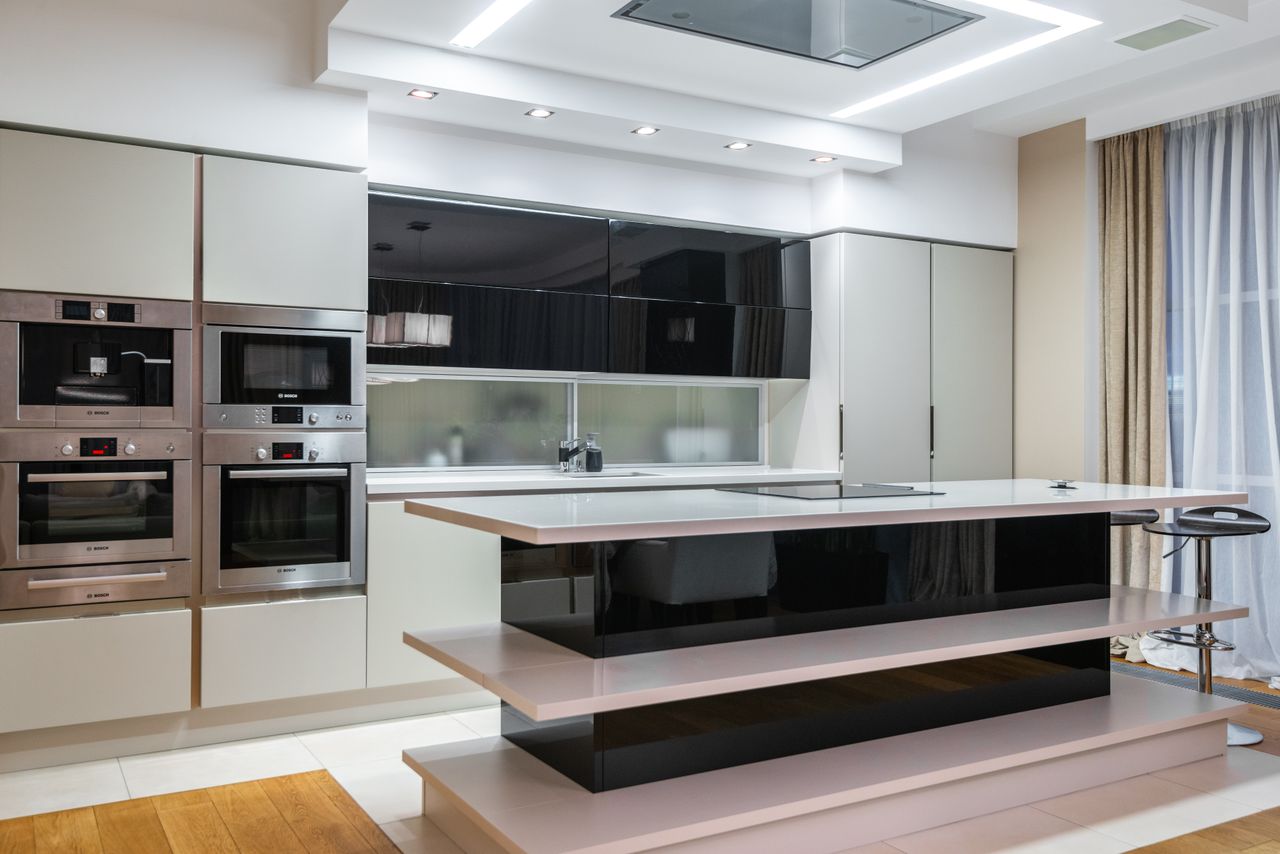
Two-tone kitchen cabinets in Saskatoon homes have become one of the most requested looks we see at Saskatoon Cabinets. Homeowners want a kitchen that feels intentional and modern without going over the top, and two-tone cabinetry delivers exactly that. The idea is simple: use one colour or finish on your upper cabinets and a different one on your lower cabinets or island. The result is a kitchen that has depth, personality, and a custom feel that a single-colour design simply cannot match.
The trend is not going anywhere. What started as a design choice seen mostly in high-end renovations has become one of the most popular requests across Saskatoon kitchens of all sizes and budgets. If you have been thinking about updating your kitchen and are not sure what direction to take it, two-tone cabinetry is worth a serious look.
What Is a Two-Tone Cabinet Design?
A two-tone kitchen uses two distinct colours, finishes, or materials in the same cabinetry. The most common approach is pairing lighter upper cabinets with darker lower cabinets. This grounds the kitchen visually, drawing the eye downward and making the ceiling feel taller. Another popular option is keeping the perimeter cabinets in one colour and finishing the island in a contrasting shade, letting the island become its own focal point.
Both approaches work well in Saskatoon homes, whether you have a compact galley layout, a traditional L or U-shaped kitchen, or a large open-concept design. The proportions change depending on the space, but the principle stays the same: contrast creates interest, and a well-chosen contrast creates a kitchen that looks designed rather than assembled.
Why Two-Tone Cabinets Are So Popular Right Now
The single-colour all-white kitchen had a long run. It is still a solid, timeless choice, and there is nothing wrong with it. But more Saskatoon homeowners are looking for something with a bit more character. Two-tone cabinetry lets you incorporate bold colours like navy, forest green, charcoal, or warm taupe without committing every surface to a dramatic choice.
You get contrast and visual interest while keeping the space balanced and liveable. The lighter upper cabinets keep the kitchen feeling open and bright. The darker or bolder lower cabinets add weight and warmth. Together, they create a kitchen that is neither flat nor overwhelming.
It also photographs well, which matters if you ever plan to sell. A two-tone kitchen has a finished, curated look that stands out in listing photos in a way that a single-colour kitchen sometimes does not.
Colour Combinations That Work
The combinations that hold up over time follow a few basic principles. The most important one is contrast. Pairing a white or cream upper cabinet with a dark lower cabinet in black, navy, or charcoal is a classic combination for a reason. It is clean, dramatic, and works with most countertop and flooring options you will find in Saskatoon homes.
Warm tones also pair beautifully together. A greige or warm white upper paired with a sage green or warm walnut lower cabinet brings in an organic, earthy quality that suits the Saskatchewan aesthetic well. Soft blues and greens paired with white or off-white uppers are another combination that has been popular for a few years and continues to feel fresh.
If you want something softer and more subtle, try two shades of the same colour family, such as a light grey upper with a deeper slate or charcoal lower. The contrast is there, but it is quieter.
What to avoid: colours that are too similar in tone but different in hue. Two slightly different shades of beige sitting beside each other tend to look like a mistake rather than a choice. If the colours are close in value, push the contrast further so the intention reads clearly.
The Island as a Contrast Piece
Many Saskatoon homeowners choose to keep their perimeter cabinets in one clean, neutral colour and use the island as the accent. This approach works especially well in larger kitchens where the island is a substantial piece of the layout and already functions as a visual centrepiece.
A white or light grey perimeter with a navy or black island gives you a bold, contemporary look without the perimeter feeling heavy. The island becomes the statement, and everything else supports it without competing. If your kitchen has a window wall on one side and the island sits in the centre, this approach makes natural use of that layout.
If your kitchen is smaller, a contrasting island can actually make the space feel larger by defining zones within an open floor plan. It draws a visual line between the kitchen and the adjacent living or dining area without the need for a physical wall.
Choosing the Right Finishes and Materials
Two-tone does not have to mean two paint colours. Some of the most successful two-tone kitchens in Saskatoon combine a painted finish on the upper cabinets with a natural wood veneer on the lower cabinets or island. This adds texture and warmth alongside the colour contrast, and it keeps the kitchen from feeling flat or overly graphic.
Wood-tone lower cabinets paired with painted white or off-white uppers is a combination that has stayed relevant across decades of kitchen design. It reads as warm and natural rather than trendy, and it works in both contemporary and more traditional home styles.
Matte finishes are the right call for the dominant colour in most kitchens. A matte or satin sheen is forgiving, hides fingerprints better than gloss, and photographs well. If you want to add a slight sheen somewhere, use it on the accent piece, such as the island, to give it just a bit more presence.
Hardware Choices for Two-Tone Kitchens
Hardware is what ties two different finishes together. In a two-tone kitchen, the temptation can be to use different hardware on the upper and lower cabinets to match each colour. Resist it. Using the same hardware finish throughout the entire space, uppers, lowers, and the island, is almost always the better choice. Switching hardware between sections tends to make the design feel fragmented, like two different kitchens sharing the same room.
Matte black hardware works with nearly every colour combination and lends a clean, modern edge to any kitchen. Brushed gold or champagne bronze adds warmth and works especially well with earthy, neutral, or cream-based palettes. Brushed nickel is the most versatile classic option and coordinates effortlessly with stainless steel appliances if you have them.
Keep the finish consistent across all cabinets. One hardware choice, applied throughout, makes the two-tone design feel cohesive rather than busy.
Planning Your Two-Tone Kitchen: What to Think About First
Two-tone cabinetry requires a bit more planning than a single-colour design because there are more decisions to coordinate. Before you commit to a combination, think through a few things.
First, consider what you are keeping. If your countertops, backsplash, and flooring are staying in place, your cabinet colours need to work with those existing surfaces. Bring colour chips or samples home and look at them in your kitchen under your actual lighting, not showroom lighting. Saskatoon kitchens vary widely in natural light depending on window placement and orientation. A colour that looks perfect in a bright south-facing room can look completely different in a north-facing kitchen with less natural light.
Second, think about the long term. A two-tone kitchen works best when the colour choices feel like you, not like a trend you are chasing. Colours that are grounded and a bit classic, even if they feel fresh now, will hold up better over ten years than something very of-the-moment.
Third, think about maintenance. Darker lower cabinets, particularly in a family kitchen, will show scuffs and marks more readily than lighter colours. This is not a reason to avoid them, but it is worth choosing a finish that is easy to clean and durable.
Working With a Local Cabinet Maker in Saskatoon
Getting a two-tone kitchen right comes down to the quality of the cabinetry and the precision of the planning and installation. The transition between two colours has to be clean. The proportions between the two finishes have to be considered in relation to your actual space. The hardware has to work with both finishes. These are details that a local cabinet maker with experience in custom builds can help you navigate before anything is ordered or built.
At Saskatoon Cabinets, we build custom cabinets designed around your specific kitchen dimensions, your layout, and your style. We have been building custom cabinets for Saskatoon homeowners since 1982 and we have seen what works and what does not across the full range of home styles and kitchen layouts in this city.
If you are thinking about a two-tone kitchen for your Saskatoon home, we would be glad to walk you through your options. Visit Saskatoon Cabinets to learn more about what we do, explore our kitchen cabinets options, or contact our team to start the conversation. You can also view finished projects in our gallery, learn about our full range of cabinet services, and explore our custom cabinet solutions designed for Saskatoon homes.
